

 Click main image to view in full screen. Unlock all 27 preview images:
Hydropower Infrastructure Model – Excel XLSX
Excel (XLSX)


VIDEO DEMO
BENEFITS OF THIS DOWNLOADABLE EXCEL DOCUMENT
- Infrastructure modeling framework for hydropower construction and operation.
RENEWABLE ENERGY EXCEL DESCRIPTION
I've done quite a bit of research on understanding the nuances of financial planning for an infrastructure project involving hydropower. There are all kinds of structures that essentially get power out of the process of funneling water from a higher location to a lower location. The energy released is captured and used to power grids / towns and so forth. Some countries get over 90% of their energy from dams. Large scale projects can take up to 10 years to complete and produce massive amounts of energy.
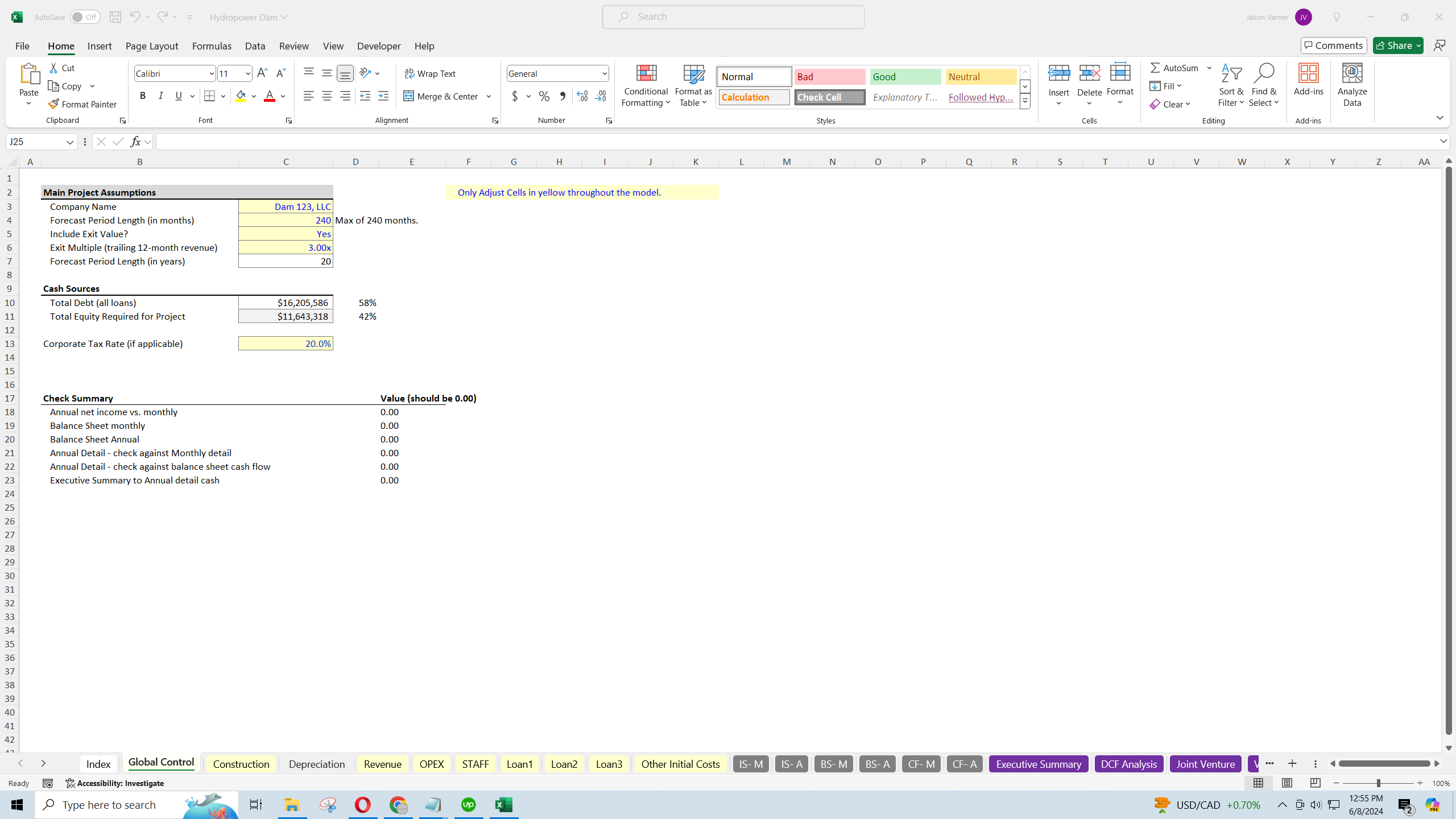
This financial model lets the user plan out investment requirements over time while considering borrowing costs in a dynamic debt schedule that also has a conversion to a term loan. The interest only period can also be accrued or not with a simple yes/no selector.
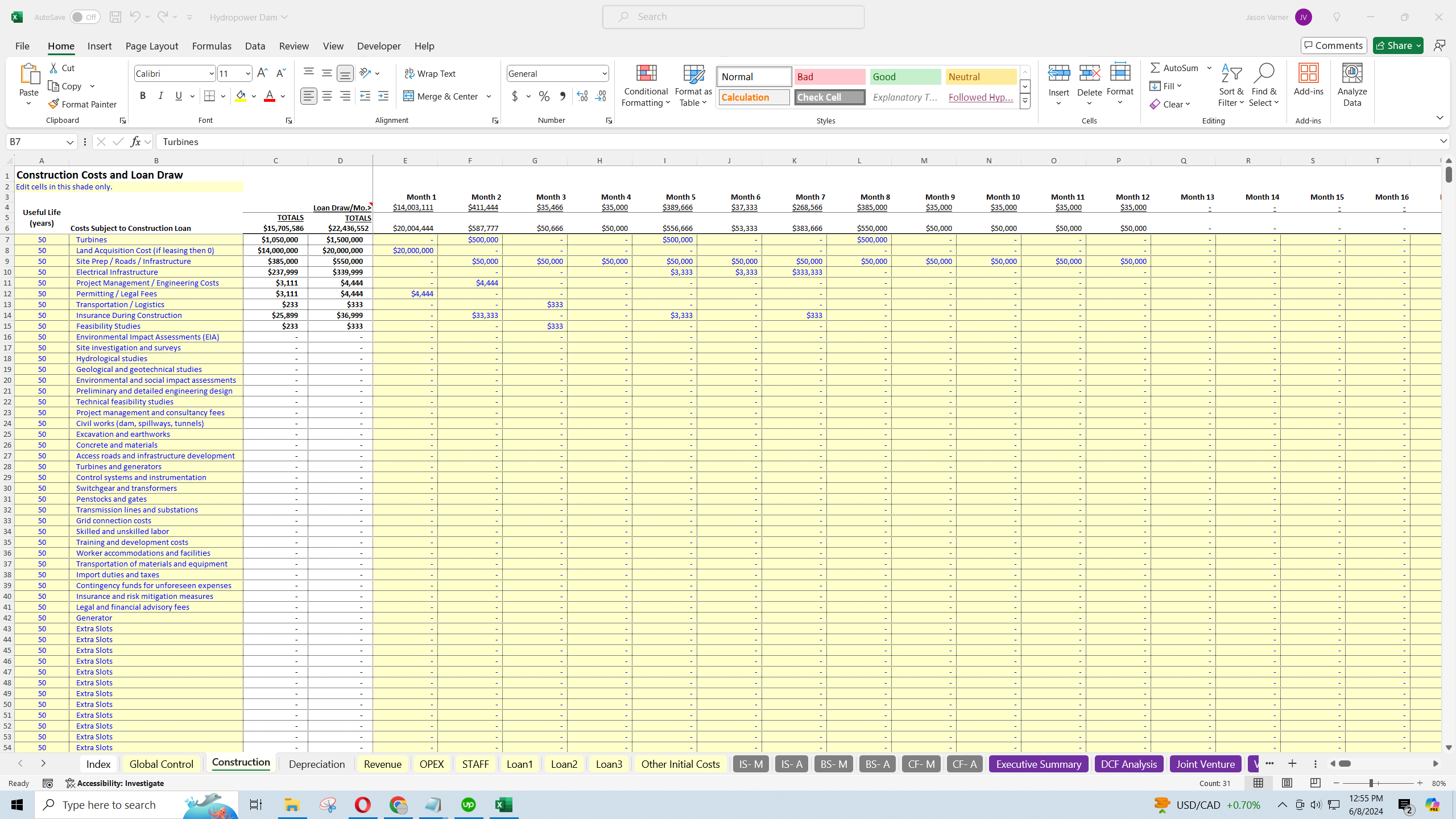
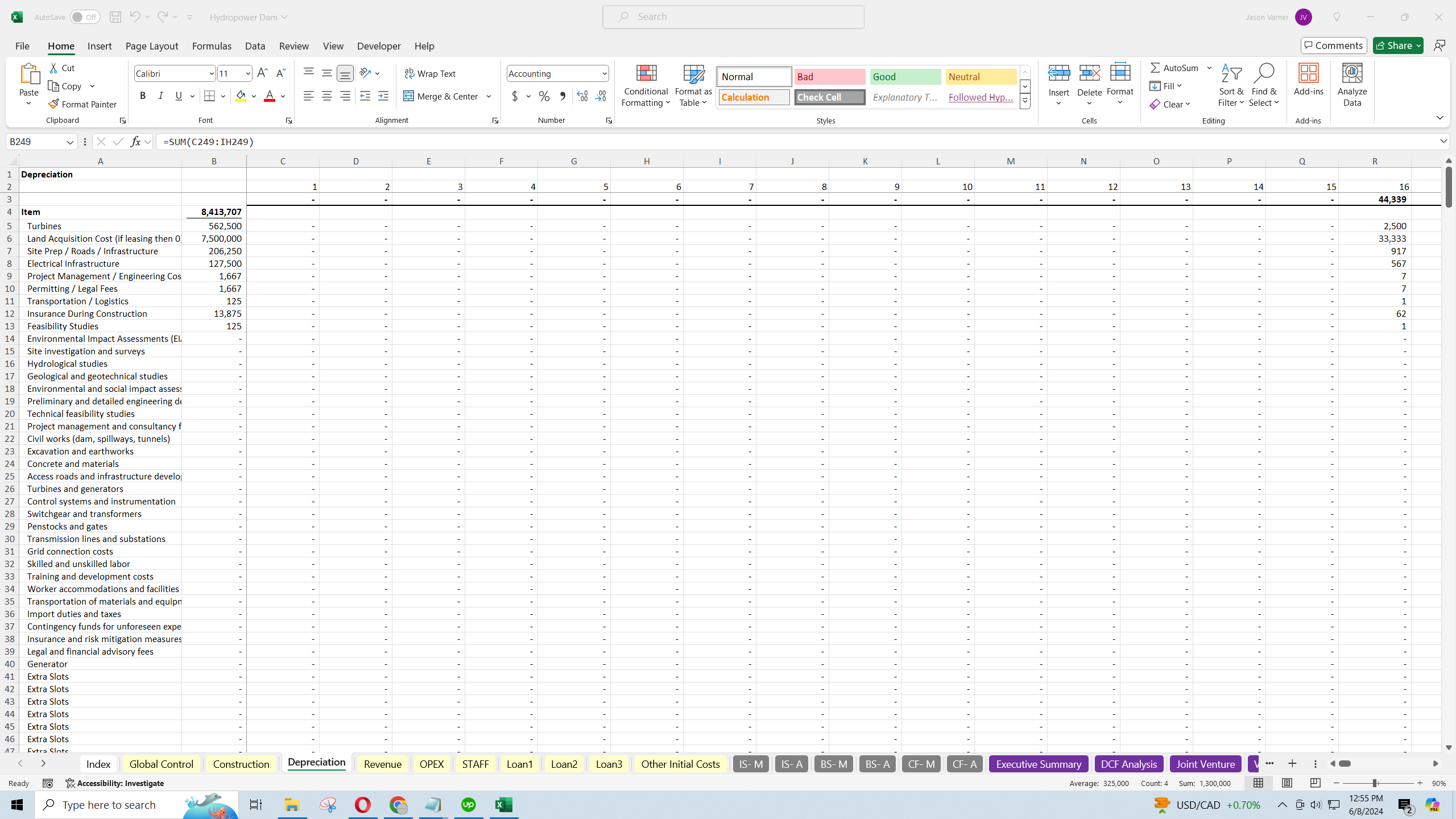
I've included 100s of rows to get all relevant construction costs entered in monthly. This will primarily affect the amount of interest required. Any cash requirements that are not covered by debt will then come from the operator/GP/LP or whoever is funding the project. The model will solve for a minimum cash requirement.
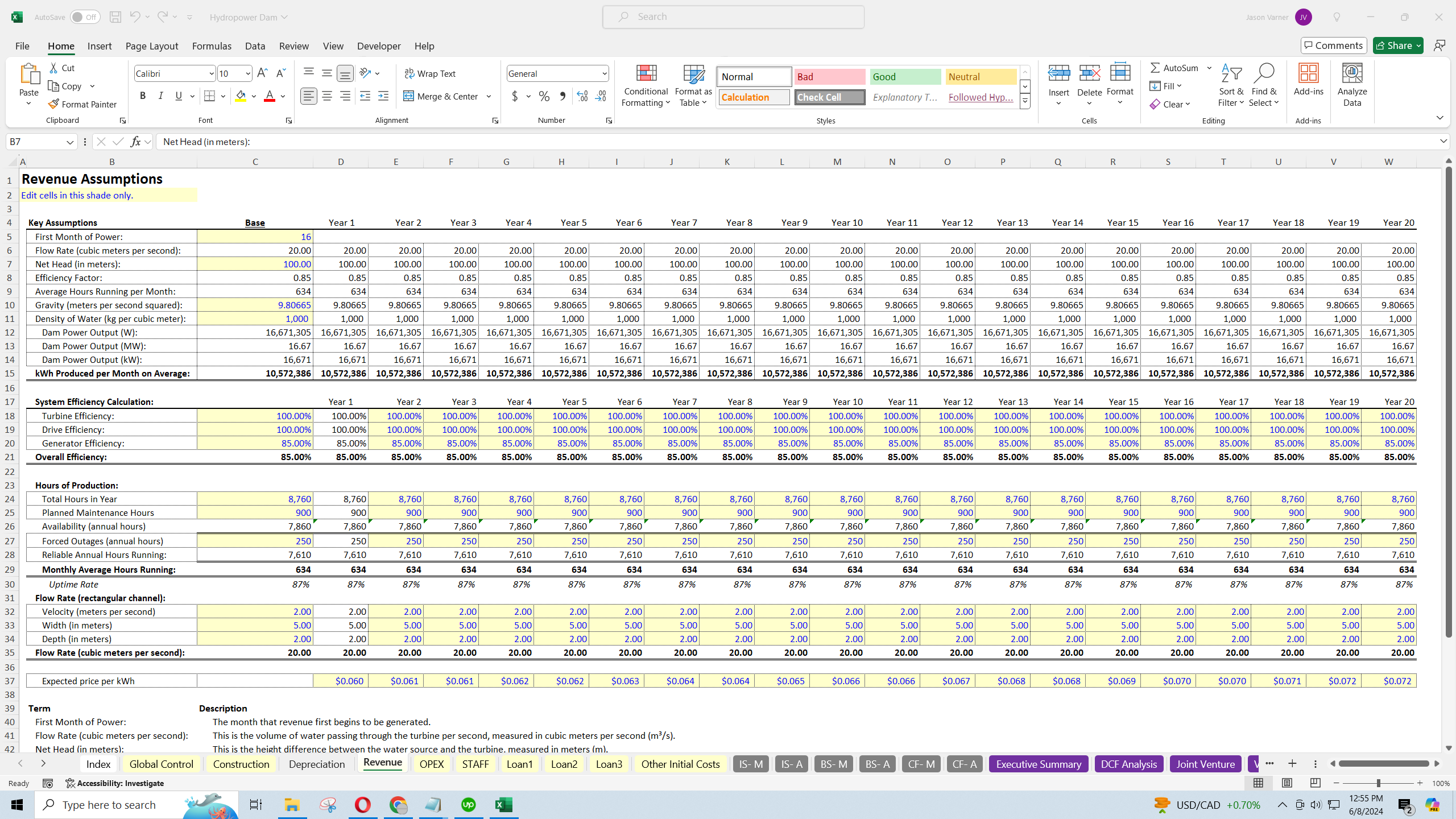
To calculate the power a dam can produce, you need to know the head (net height from top to bottom in meters), flow rate (in cubic meters per second), efficiency, and uptime. Your measurements for the height and size of the area the water is flowing through must be calculating the right units to come to the expected watts of the dam. That is then converted in kWh, a price can be applied to that, and expected revenues as a result. I've done all measures in meters for standardization and ease of checking the calculations.
All the above assumptions can be adjusted over a 20-year period in order to see what happens as various things change, such as pricing, expansion of the dam, and/or efficiency reduction.
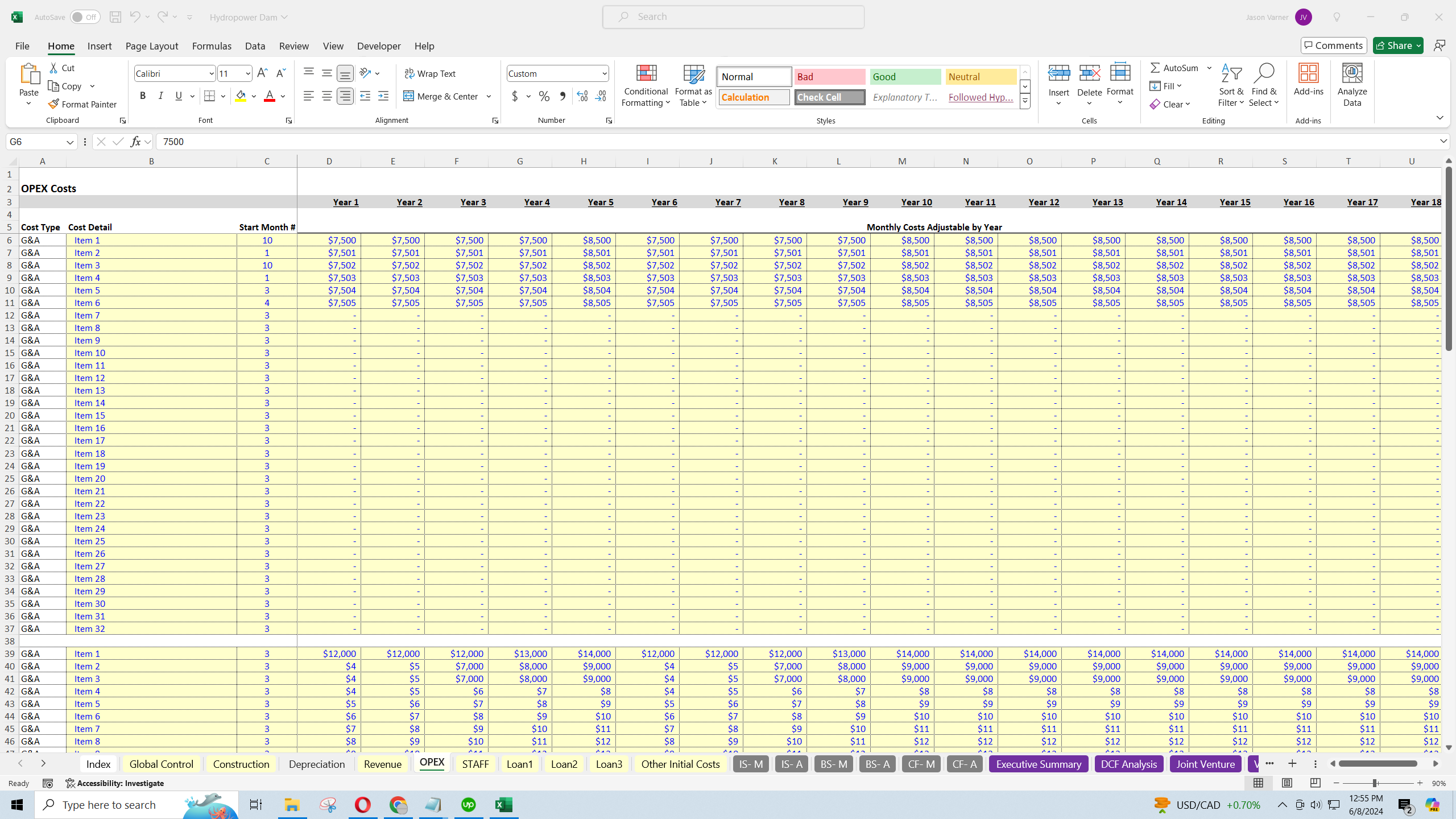
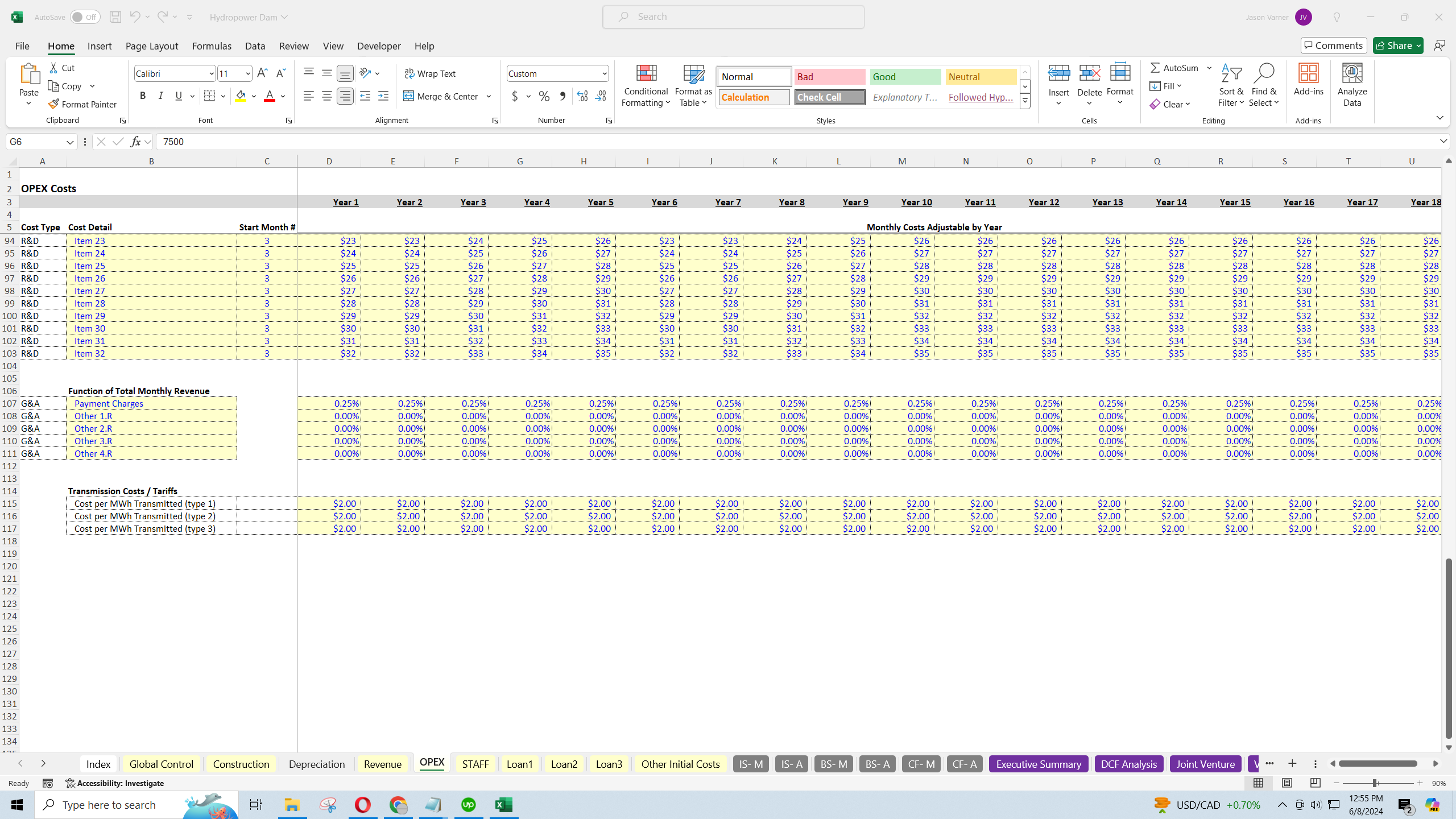
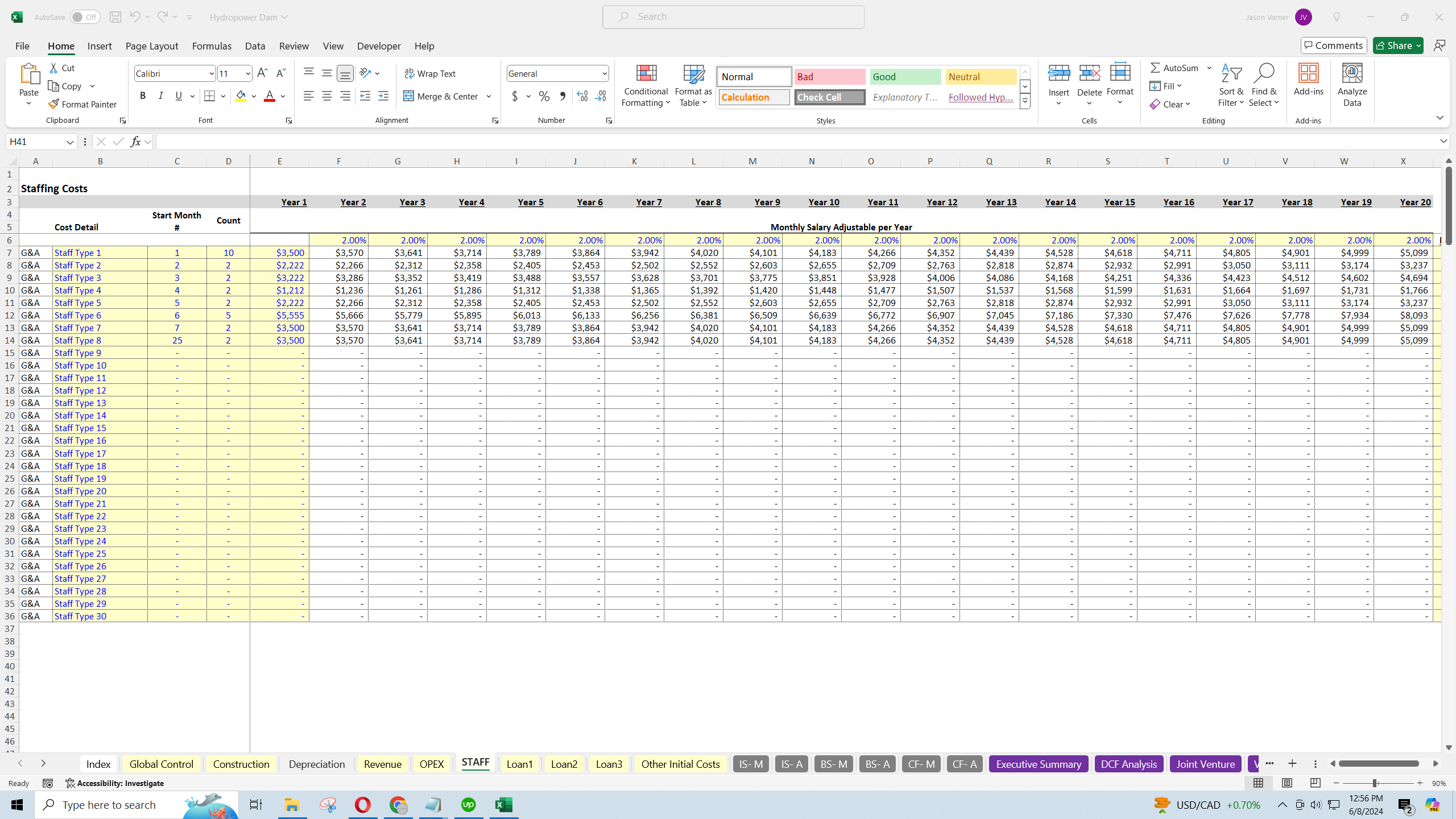
There are also costs that will be derived from the expected amount of kWh sold (3 different slots for that) and the general operating costs required to keep the dam operational over time.
Output reports include a monthly and annual 3-statement model, DCF Analysis, IRR, Equity Multiple, Optional Joint Venture Waterfall with IRR Hurdles, and an Executive summary. As the assumptions are adjusted, all output reports and visuals automatically adjust.
Instructional video included in file.
Got a question about the product? Email us at support@flevy.com or ask the author directly by using the "Ask the Author a Question" form. If you cannot view the preview above this document description, go here to view the large preview instead.
TOPIC FAQ
How do I estimate electricity production for a hydropower dam in a financial model?
Electricity production is estimated from net head (height in meters), flow rate (m3/s), turbine-generator efficiency, and uptime. Those inputs are converted to watts then kWh and multiplied by an assumed price to project revenues; the Hydropower Infrastructure Model standardizes measures in meters and converts to kWh.What construction-phase financing elements should a hydropower model include?
A useful model captures monthly construction costs (hundreds of rows), a dynamic debt schedule that can convert to a term loan, options for whether interest-only periods accrue, and automatic calculation of uncovered cash that sponsors must fund. Flevy's Hydropower Infrastructure Model includes these features and solves for minimum cash requirement.Which time horizon is typical for hydropower financial projections?
Hydropower assets commonly require multi-decade forecasts; this model lets users adjust assumptions over a 20-year period to evaluate pricing, efficiency degradation, or capacity expansion across that horizon.What financial outputs are important for valuing a hydropower project?
Core outputs include monthly and annual three-statement projections, discounted cash flow valuation, internal rate of return, equity multiple, and optional joint-venture waterfall with IRR hurdles; the model produces these reports and an executive summary.When choosing a hydropower financial template, what features matter for fast underwriting?
Prioritize templates with monthly construction detail, the ability to derive kWh from head/flow/efficiency, dynamic debt scheduling with conversion options, scenario-driven multi-year assumptions, and DCF/IRR outputs; these elements are represented in Flevy's Hydropower Infrastructure Model with a dynamic debt schedule.How much modeling and industry experience did the template author have?
The spreadsheet was created by an accountant and financial modeler with over 10 years of global experience who has served 750+ clients across various industries; an instructional video is included in the file.I need to assess a funding shortfall during construction—how can a model help?
A model with monthly construction cost inputs, interest accrual options, and a dynamic debt schedule can calculate total interest during build, determine amounts not covered by debt, and solve for the minimum cash requirement that must be provided by the operator, GP, or LP; this model returns a minimum cash requirement.How can I test price, efficiency, and volume scenarios over an asset’s life?
Use adjustable assumptions over the model’s forecast horizon to vary price per kWh, efficiency, uptime, and production slots; revenue-driven operating costs then update and all outputs (statements, DCF, IRR) refresh—this model supports adjustments over a 20-year period and includes 3 kWh sales slots.Source: Best Practices in Renewable Energy, Integrated Financial Model Excel: Hydropower Infrastructure Model Excel (XLSX) Spreadsheet, Jason Varner | SmartHelping
ABOUT THE AUTHOR

I graduated in 2011 with a Bachelor's degree in Accounting and began my career as a financial analyst at a small chain of auto repair shops. After gaining valuable experience, I launched my own practice specializing in real estate underwriting, later expanding into general business modeling.
I honed my spreadsheet modeling expertise by completing over 400 projects on Upwork with a 100% success
... [read more]
Ask the Author a Question
You must be logged in to contact the author.




























